Missed Calls Are Lost Leads: A Follow-up System That Doesn't Depend on Memory
A missed call is a customer who wanted to talk to you and couldn't. Most businesses treat it as a red digit to clear. Here's how to treat it as a lead.
Co-Founder, Aidavo
Pick up your phone and count the missed calls from last week you never returned. For most business owners the honest number is not zero. Each one was somebody who wanted something badly enough to dial — and then, when nobody answered, probably dialled the next business instead.
Missed calls aren't really a phone problem. They're a follow-up problem. The call being missed is fine; people are busy. What loses the customer is that nothing happens afterwards. This post is about building missed call management that doesn't rely on anyone remembering.
Why missed calls slip through
- They look like noise. A missed call on a personal phone sits next to spam, family and delivery agents. It gets cleared without a thought.
- There's no context. A bare number doesn't say whether it was a ₹5 lakh enquiry or a wrong number, so nobody prioritises it.
- Nobody owns it. If the business number rang three phones and none answered, whose job is the callback?
- “Later” never comes. The plan to call back after this meeting becomes after lunch, then tomorrow, then never.
Step one: make sure fewer calls are missed
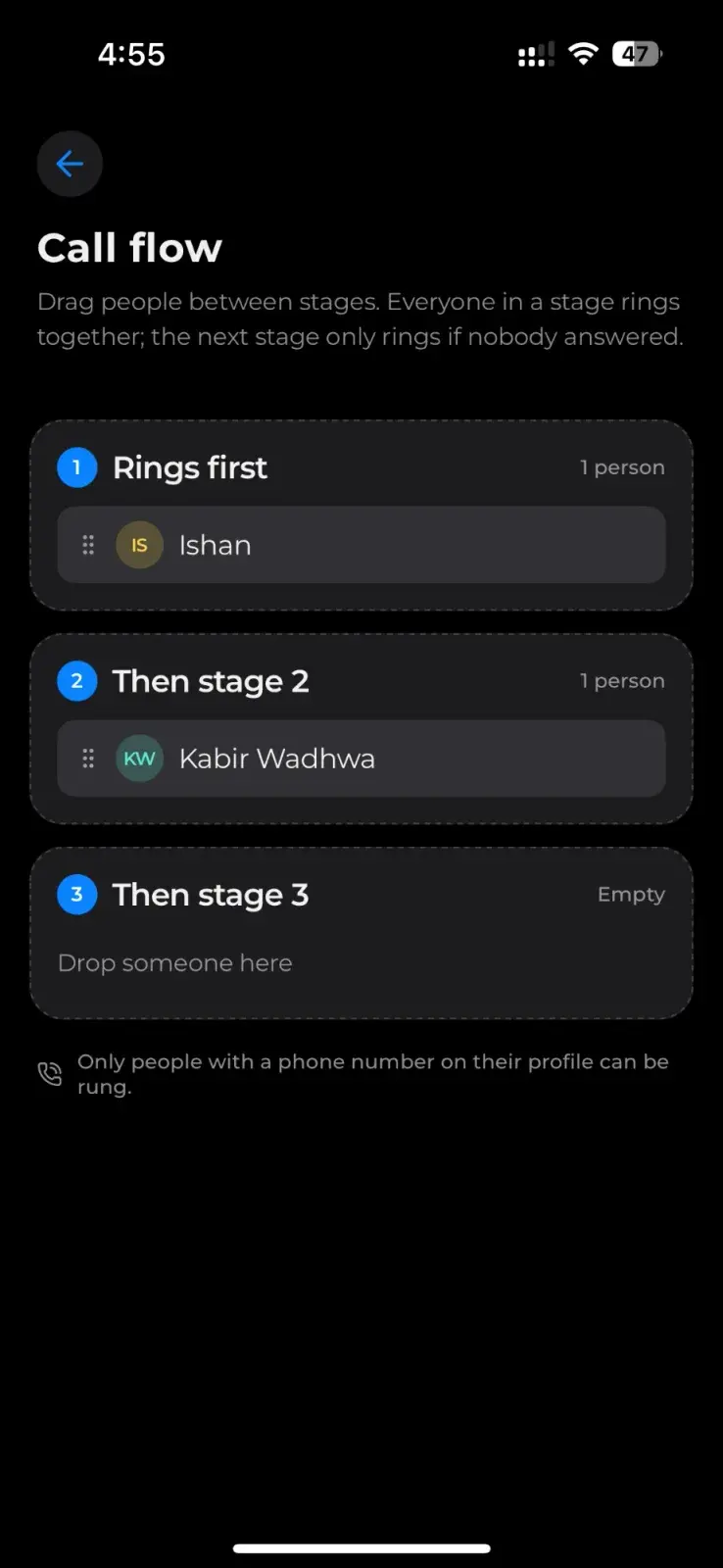
Before fixing follow-up, reduce the number of calls that need it. If your business number rings a single phone, route it to more people. A staged call flow rings your front line first, then backup, so a call only goes unanswered when genuinely everyone is busy.
Step two: turn every missed call into a lead
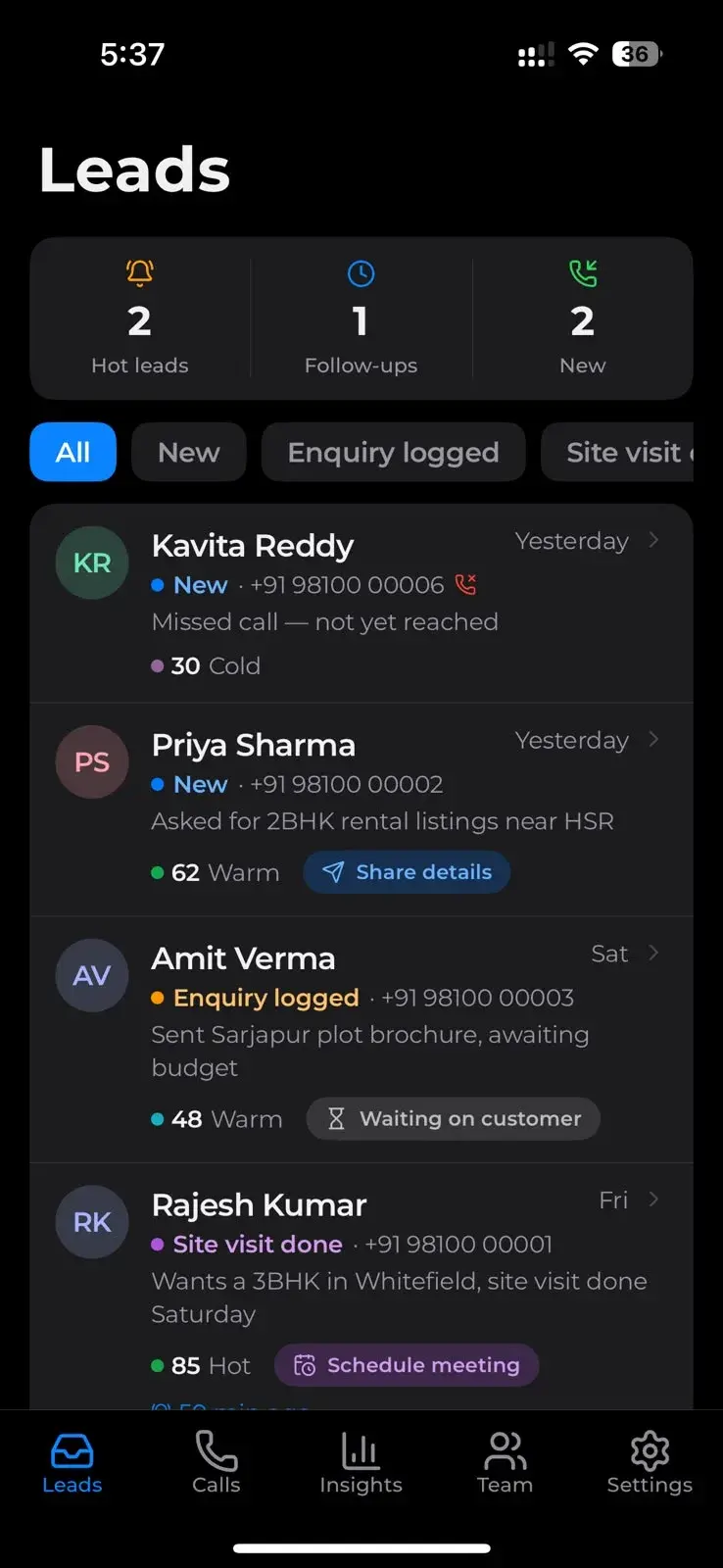
When a call to your Ultraphone number isn't answered, the caller reaches voicemail. If they leave a message, it's transcribed. Either way, a lead is created automatically — in the same inbox as every answered call — with a reminder to call back. No red digit to clear; a card with a name, a number and a next step.
7:42 pm
Kavita calls the business number
Stage 1 and stage 2 ring. Everyone's with a customer.
7:43 pm
Nobody picks up
After the ring budget, the call goes to voicemail instead of ringing forever.
7:43 pm
A lead is created anyway
Voicemail transcribed if she left one. Marked “not yet reached”.
Next morning
Callback reminder at the top of the inbox
Whoever's free calls back from the business number. The call joins the same lead.
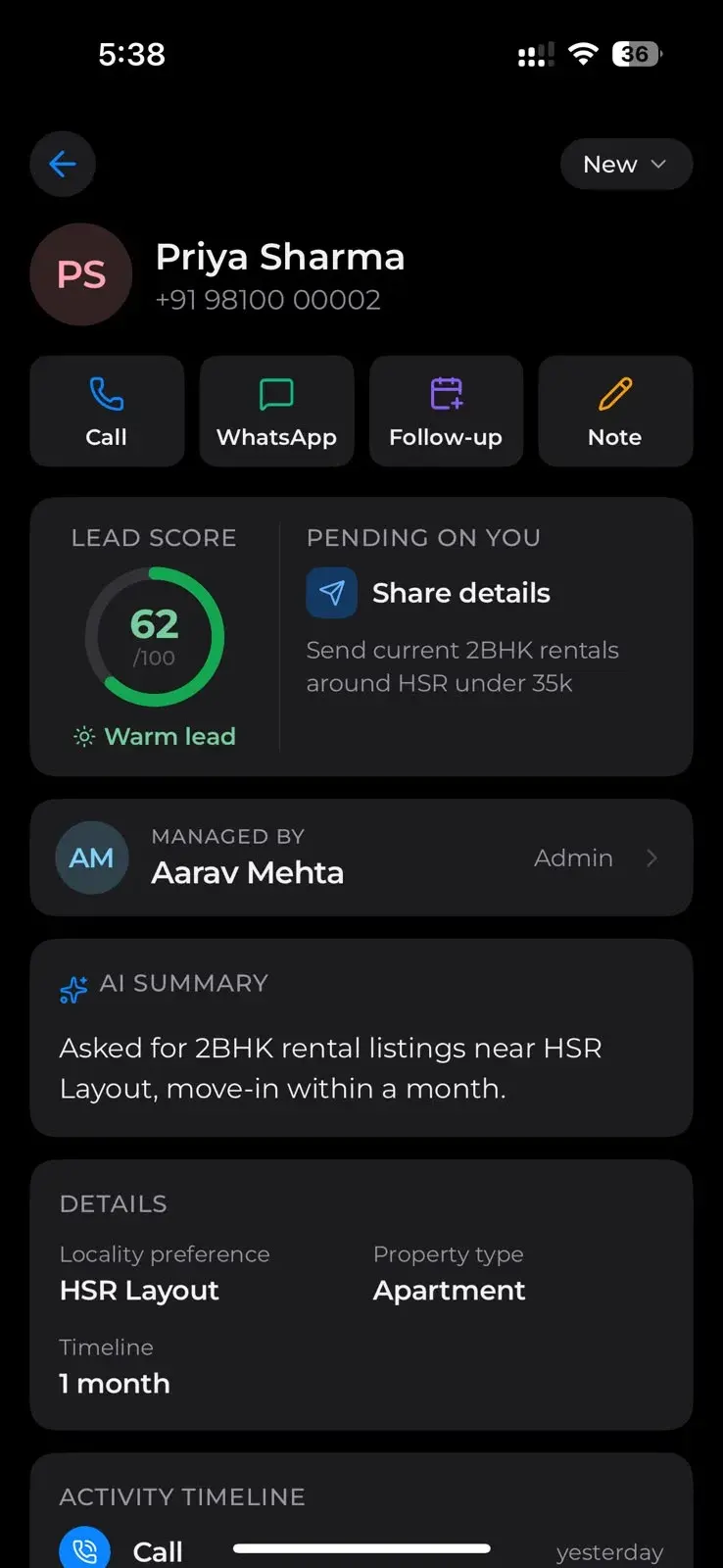
Step three: every lead carries what's pending on you
The follow-up that loses deals isn't usually the missed call — it's the second and third touch after a good conversation. The customer asked for a quotation, the salesperson said “I'll send it today”, and then a busier customer called.
Ultraphone ends every call by writing the next step onto the lead: Send quotation, Share details, Fix site visit, with a follow-up date. The inbox shows follow-ups that are due at the top, alongside hot leads and new enquiries. Nobody keeps a to-do list in their head, because the list is the inbox.
Step four: call back fast
Speed matters more than polish. A widely cited MIT and InsideSales study found that leads contacted within five minutes were far more likely to qualify than those contacted after thirty. A missed caller who hears back in ten minutes often hasn't found an alternative yet; one who hears back tomorrow usually has.
Call back from the business number, not a personal phone, so the customer recognises who's calling — Ultraphone's outbound calls ring your phone, then connect to the customer from the business number, and the callback is recorded and added to the same lead.
A missed-call routine for a small team
- Every hour: glance at the inbox for new “not yet reached” leads and call back the ones during business hours.
- Start of day: work follow-ups due today, hot leads first.
- End of day: anything still pending gets a new follow-up date — nothing is left without a next step.
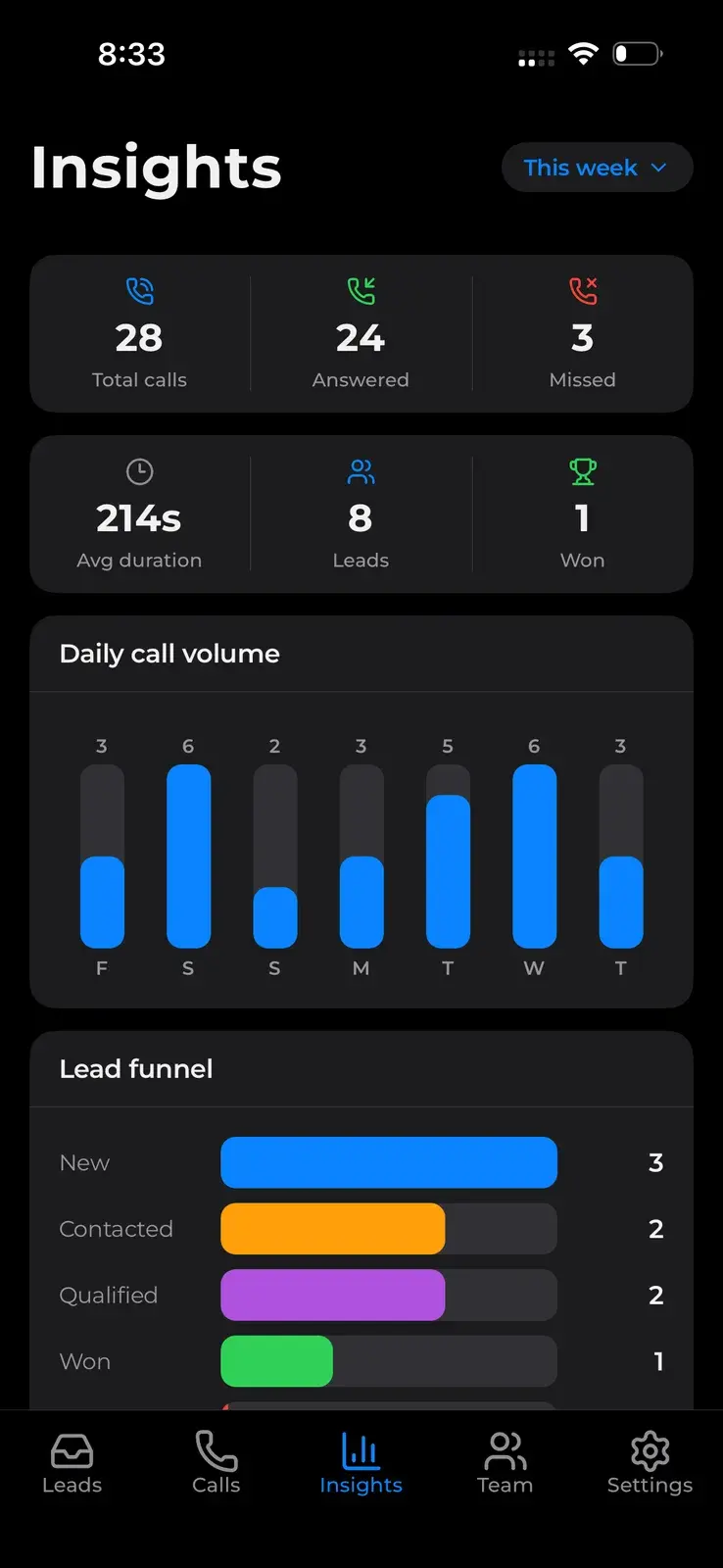
- Weekly: check how many calls were missed and how fast they were returned. The Insights tab counts missed calls for you.
You won't answer every call. You can make sure every call gets answered eventually — and that the answer comes from a system, not from someone's memory.
Frequently asked questions
- How do I stop losing leads from missed calls?
- Route calls to more than one person so fewer are missed, turn every unanswered call into a lead with a callback reminder, and call back quickly from your business number. Ultraphone does the second part automatically: unanswered calls go to voicemail, the message is transcribed, and a lead is created in your inbox.
- What happens when I miss a call on Ultraphone?
- The caller reaches voicemail. If they leave a message it's transcribed, and a lead is created with a reminder to call back. Missed calls appear in the same Leads list as answered calls, marked as not yet reached.
- How fast should I return a missed business call?
- As fast as you can — ideally within minutes during business hours. Response-time research consistently shows that the chance of reaching and qualifying a lead drops sharply after the first half hour.
- Can Ultraphone remind me to follow up after a call?
- Yes. After every call Ultraphone writes a next action and follow-up date onto the lead, and due follow-ups surface at the top of your inbox.