AI Lead Scoring for Small Businesses: Know Which Caller to Call Back First
Twenty leads, time to call back six. Most teams pick the newest ones. The buyer with a budget and a deadline deserves to go first — and the call already told you who that is.
Co-Founder, Aidavo
Every small business with a working phone has the same Monday-morning problem: more enquiries than time. Twenty people called last week. You can properly follow up with maybe six today. Which six?
Most teams answer by timestamp — newest first, or down the list — or by gut feel, which really means whoever the salesperson remembers liking. Both ignore the one thing that predicts whether a lead will close: what the customer actually said on the call. AI lead scoring uses exactly that.
What is lead scoring?
Lead scoring gives each enquiry a number that estimates how likely it is to turn into business, so your team can work the list in order of intent rather than arrival. Traditional scoring, built for software marketing teams, adds up website behaviour: opened an email, +5; visited the pricing page, +10. That's useless for a business whose buyers don't browse — they call.
How AI scores a lead from a phone call
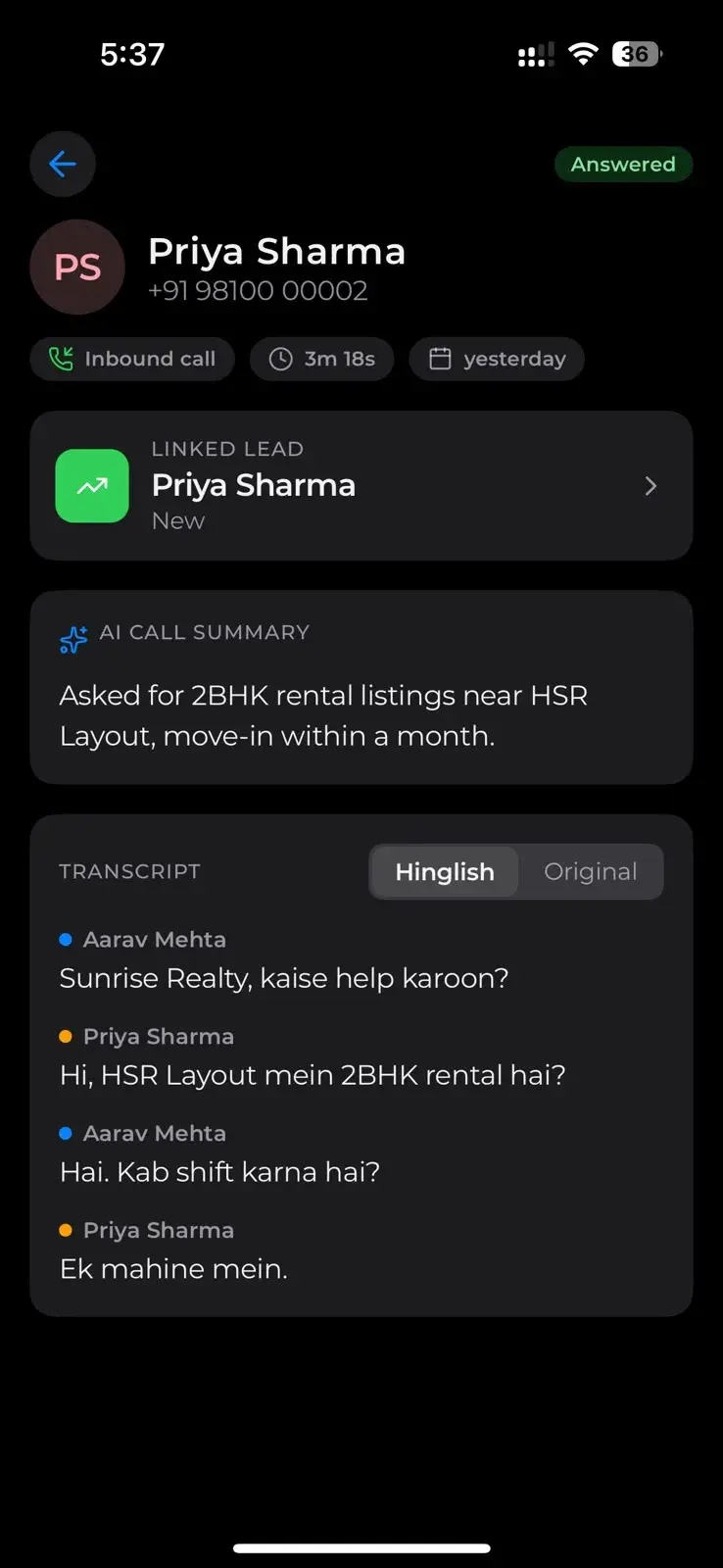
Ultraphone scores every lead from 0 to 100 using the conversation itself. After each call it has the transcript and the extracted details, and it weighs the signals a good salesperson listens for:
- Budget. Did they name one, and does it fit what you sell?
- Timeline. “This week” is worth more than “sometime next year”.
- Specificity. “3BHK, Whitefield, ready to move” beats “just checking rates”.
- Decision stage. Have they compared options, seen a sample, visited a site?
- Engagement. Did they answer questions, ask their own, agree to a next step?
The score lands on the lead card with a hot, warm or cold label, and it moves as the relationship does: a follow-up call where the buyer agrees to a site visit pushes it up, one where they go quiet pulls it down.
What a scored lead looks like
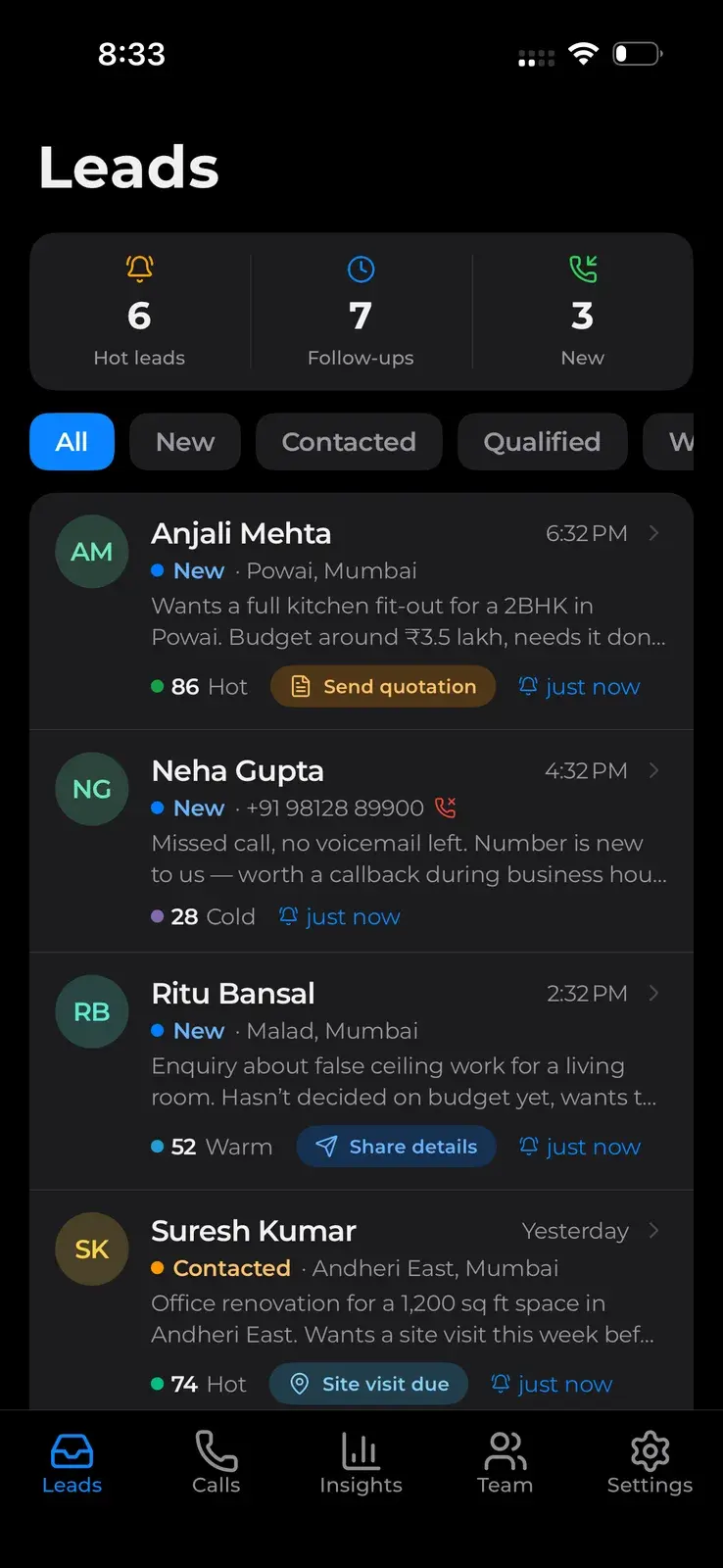
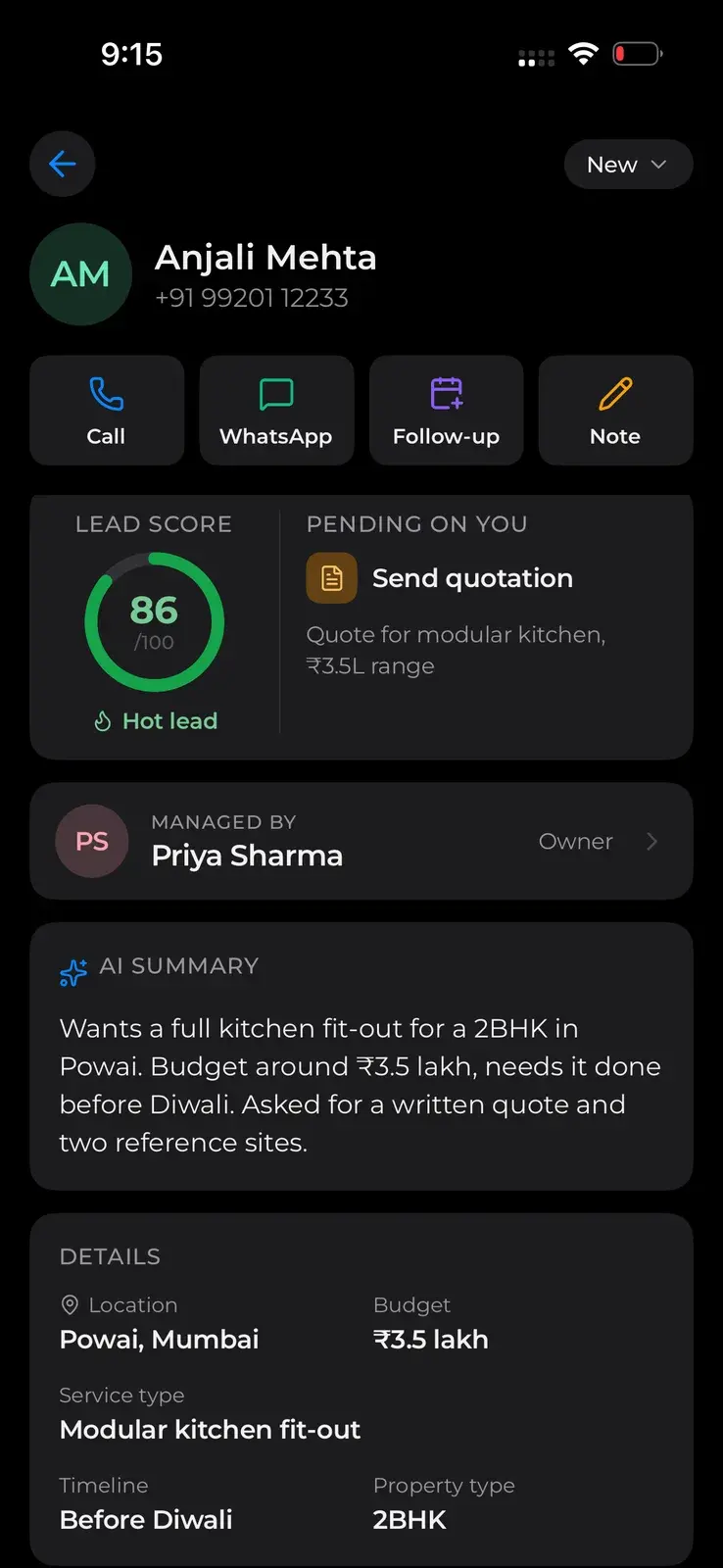
A score by itself isn't much use; you need to know why, and what to do next. Every Ultraphone lead shows the extracted details that drove the score — budget, location, timeline — and a single pending next action like “Send quotation” or “Fix site visit”. Your team doesn't interpret the number. They do the action.
How to work a scored lead list
- Hot (70+): same day. These buyers have a budget and a timeline. Every hour you wait, a competitor gets a chance.
- Warm (40–69): this week, with something useful. Send the options, the brochure, the fee structure — whatever the next action says — then follow up.
- Cold (under 40): keep, don't chase. A light touch every few weeks. Some cold leads warm up on their own; the score will tell you when.
The point of scoring isn't to ignore cold leads. It's to stop hot leads waiting in a queue behind them.
Why this matters more for small teams
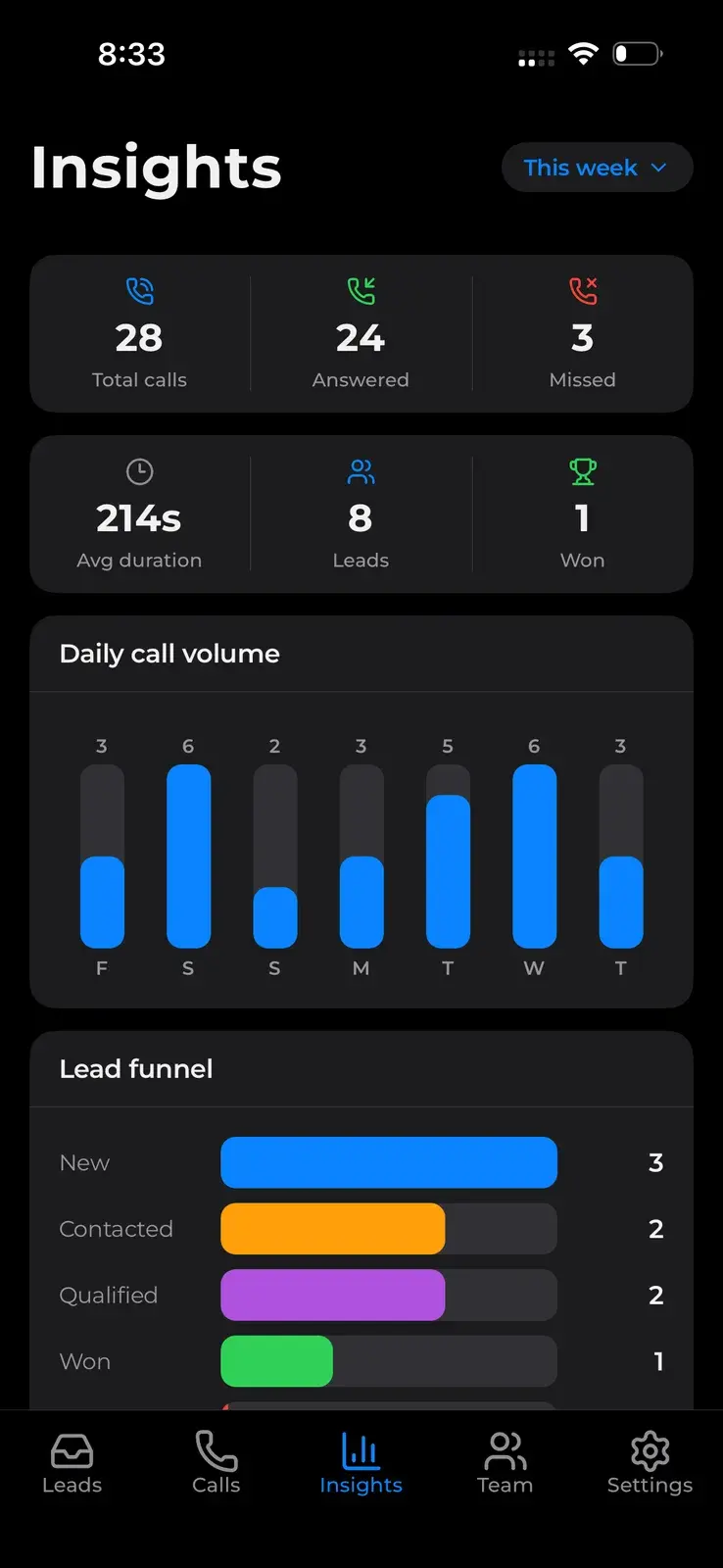
A fifty-person sales floor can afford to call everyone. A three-person team can't. When calling time is the constraint, the order you call in is the strategy. Scoring turns the same number of hours on the phone into more closed business, simply by pointing them at buyers who are ready — which is also why hot-lead response time is one of the numbers worth watching on your weekly call analytics.
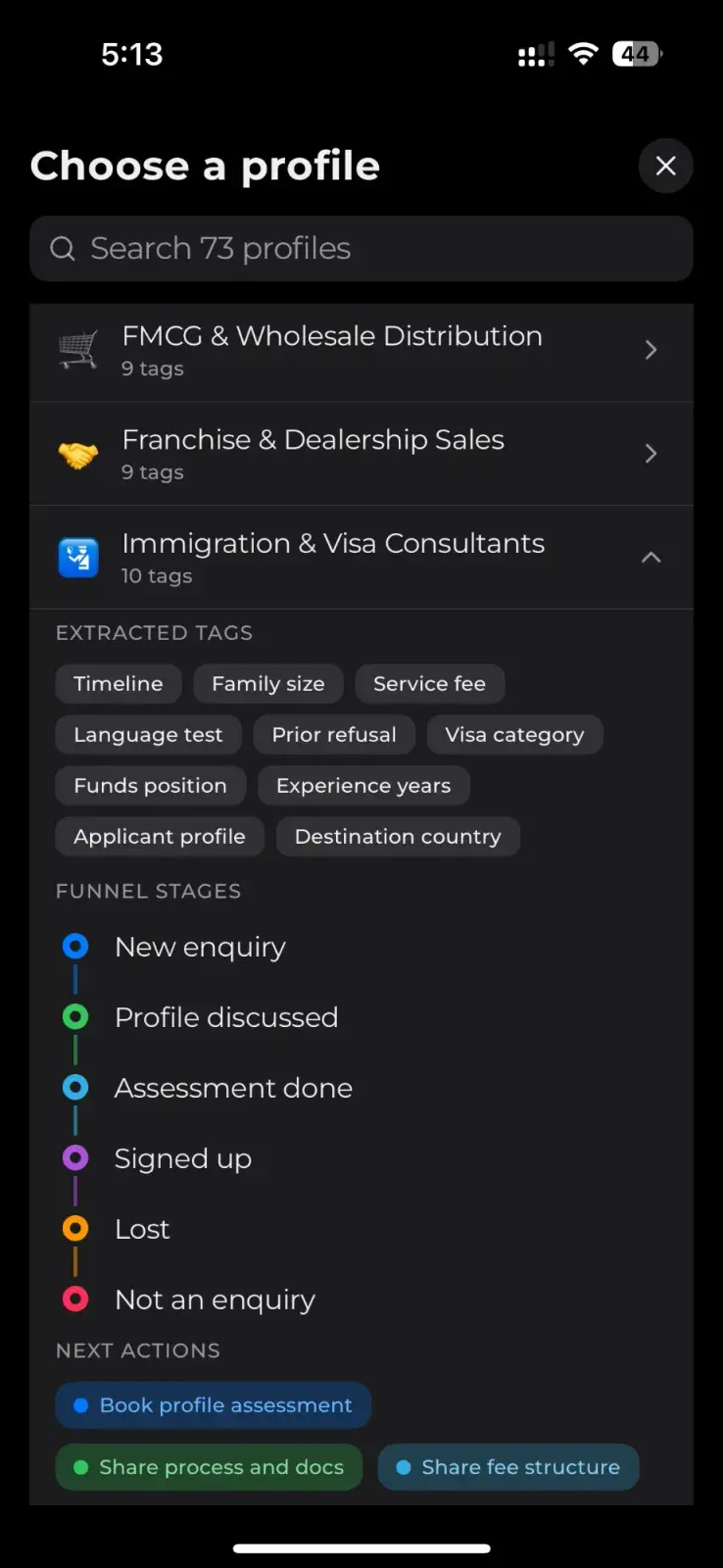
What a lead should score depends on what you sell. A ₹40,000 budget is hot for a modular wardrobe and cold for a villa. That's why Ultraphone scores against your industry profile — the same conversation means different things to different trades.
Frequently asked questions
- What is AI lead scoring?
- AI lead scoring rates how likely an enquiry is to become a sale. Ultraphone does it from the phone call itself: it reads the transcript, weighs signals like budget, timeline and specificity, and gives each lead a score from 0 to 100 with a hot, warm or cold label.
- What score makes a lead hot?
- In Ultraphone, a lead scoring 70 or above is hot and highlighted in the inbox, 40 to 69 is warm, and below 40 is cold. The score is recalculated after later calls, so it moves as the conversation does.
- Can lead scoring work without a website or ads?
- Yes. Call-based scoring needs only the conversation. It suits businesses whose customers phone rather than browse, which is most small businesses in India.
- Does the AI decide which leads to drop?
- No. The score orders the list and suggests a next action; your team decides what to do. Cold leads stay in the inbox and can warm up after a later call.