Call Analytics for Small Businesses: The Numbers Worth Checking Every Week
If your business sells on the phone, your call log is your sales report. Most owners never see it, because it lives on five different phones. Here's what it would tell you.
Co-Founder, Aidavo
Ask a business owner how many sales calls came in last week and you'll get a guess. Ask how many were missed and you'll get a shrug. That's not carelessness — the numbers simply don't exist anywhere. They're spread across the call logs of whoever answered, and nobody is adding them up.
Call analytics fixes that by counting from the calls themselves. With every call going through one business number, the report writes itself. Here are the numbers worth checking, what they tell you, and what to do when they move.
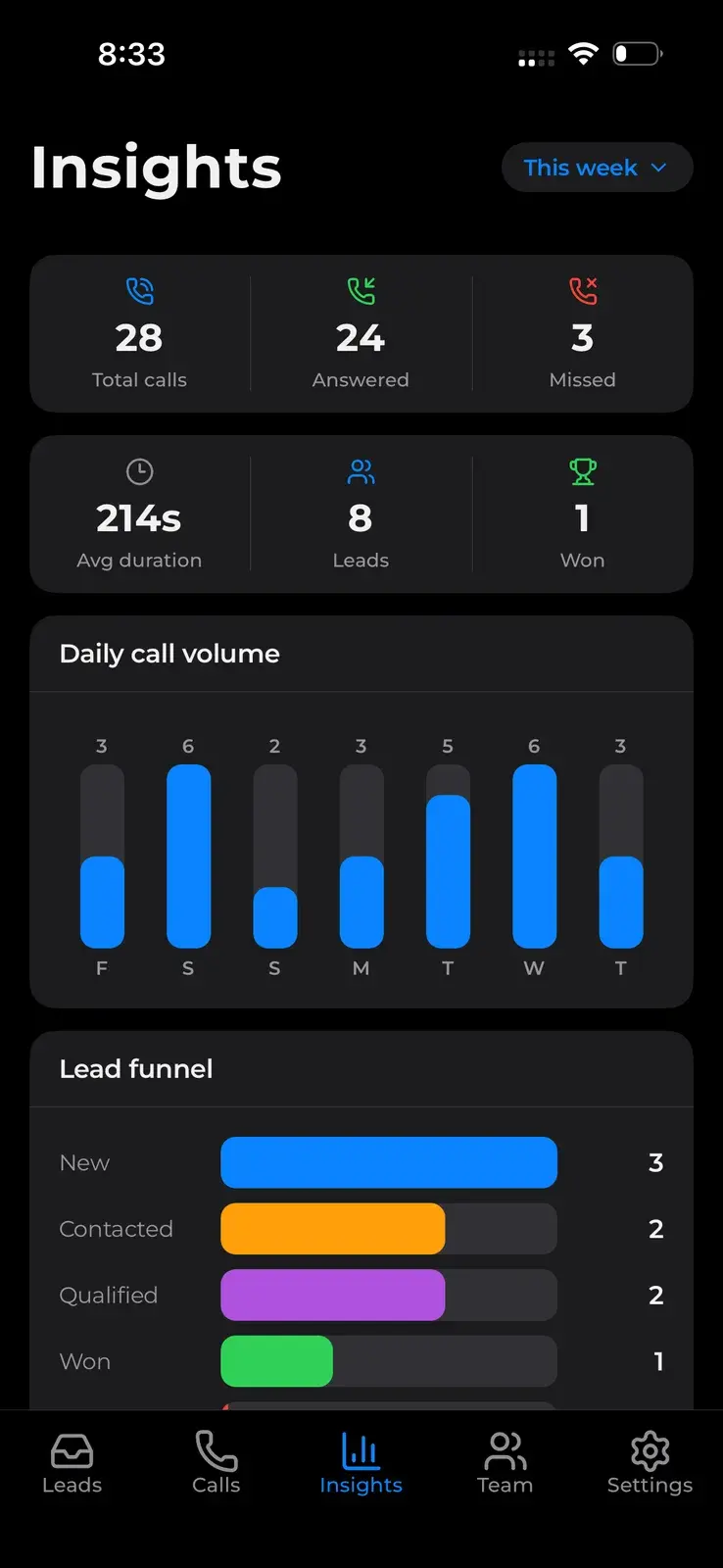
28
Calls
Demand
3
Missed
≈ 1 in 9 — check routing
214s
Avg call
Real conversations
8
Leads
From 24 answered
1
Won
The one that pays
1. Total calls: is demand moving?
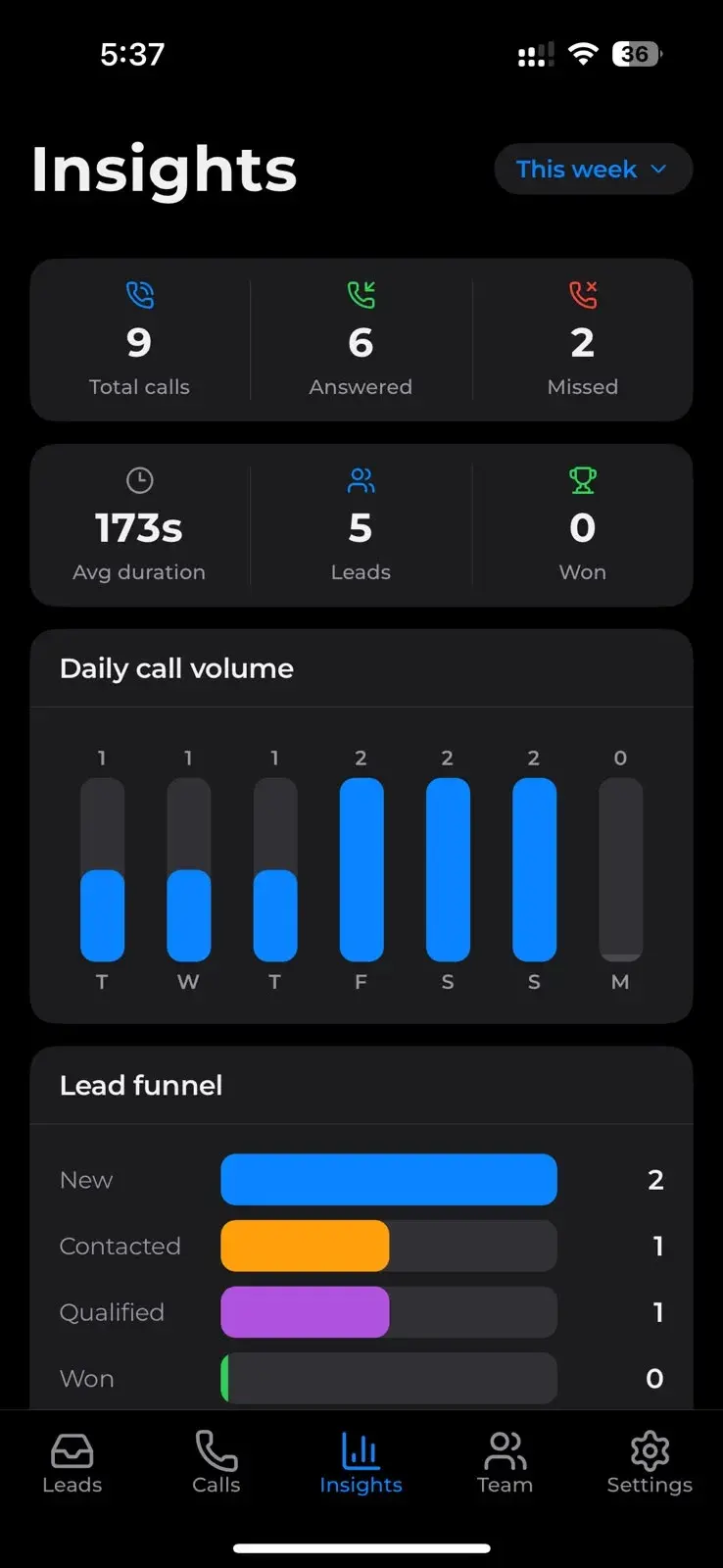
The simplest number and the earliest warning. A drop in calls shows up weeks before a drop in revenue. A spike after you list on a new portal or run an ad tells you it's working. Check the daily chart too: if Saturday is your busiest day and your team is half-staffed on Saturdays, you've found a problem.
2. Answered vs missed: are you reachable?
Missed calls are the most expensive number on the page, because each one might be a customer who called a competitor next. If more than one in ten calls is missed during business hours, look at your call routing before anything else — adding a second stage is cheaper than any ad.
3. Average call duration: are conversations real?
Duration is a rough quality signal. Very short calls often mean rate-checkers or wrong numbers; very long ones can mean a complex sale, or a salesperson who can't steer to a next step. Watch the trend, and read a few transcripts at either end before drawing conclusions.
4. Leads created: how many calls were worth something?
Leads created tells you how many enquiries the phone brought in. Not every call is one — wrong numbers and sales pitches can be moved to an honest “Not an enquiry” stage — so the funnel shows how many were real, and how much of your phone time was actually sales time.
5. Leads won: is it turning into business?
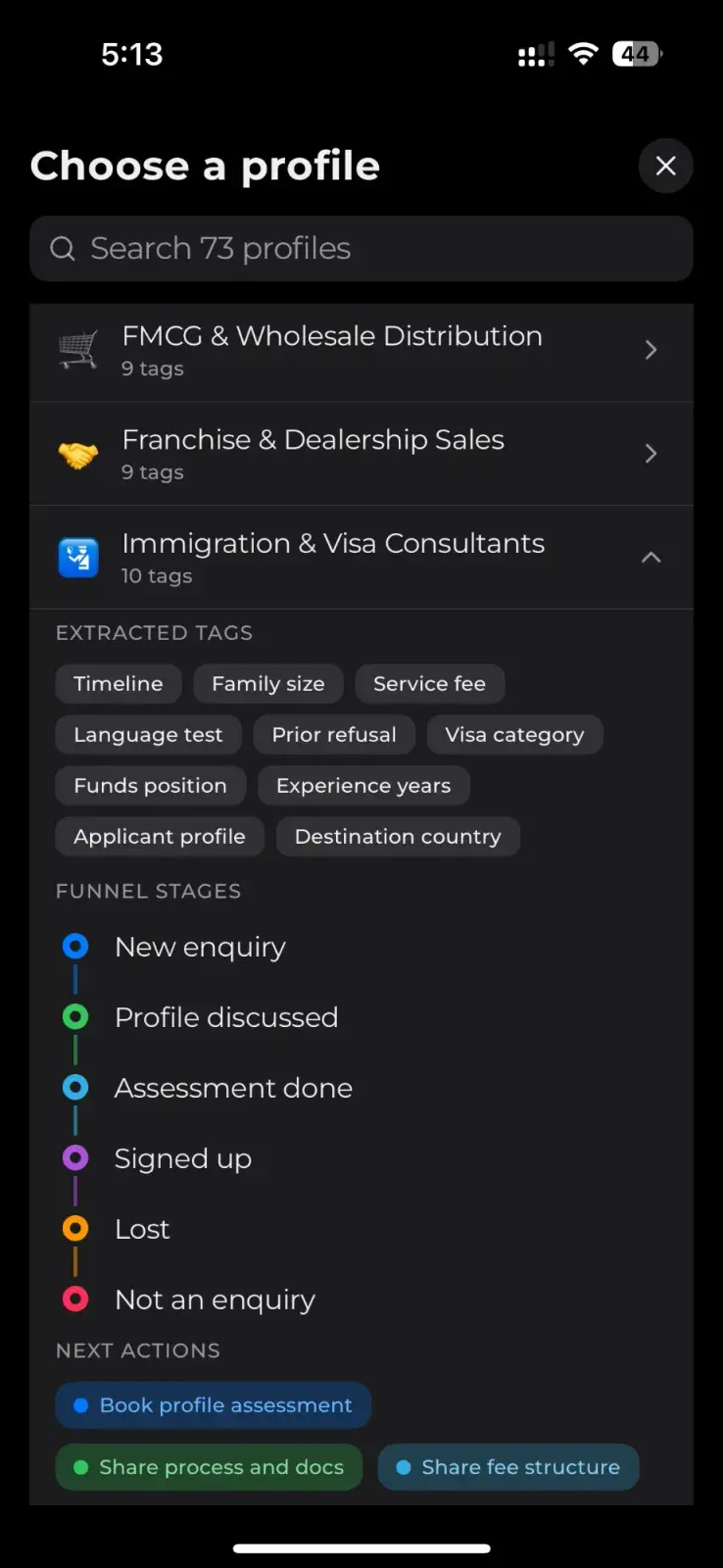
The number everything else serves. Won leads come from the funnel stages your team moves leads through, so this is only as honest as your stages — which is one more reason to use an industry profile that matches how you actually sell.
6. Per-person numbers: who's carrying the team?
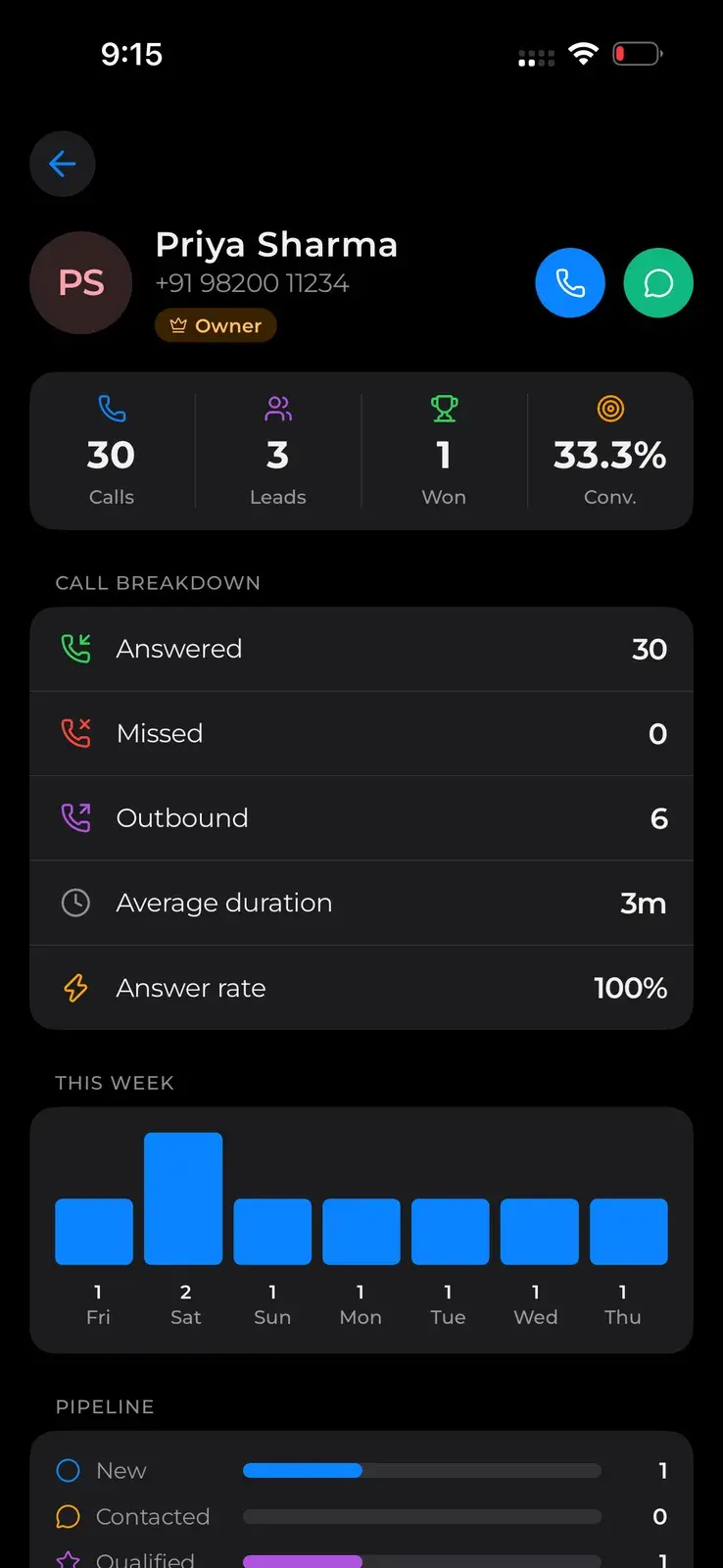
The same counts, per teammate: calls, leads, wins, conversion rate, answer rate. It's the fairest possible performance data because nobody entered it — it came from the calls. We go deeper on using it for coaching and reviews in managing a sales team with AI call data.
A ten-minute weekly review
- Calls vs last week: up, down or flat — and why?
- Missed calls: how many, on which days, and were they called back?
- Leads created: any source or day that stands out?
- Funnel: where are leads getting stuck?
- Team: who needs help, and who deserves credit?
Ten minutes a week with numbers that count themselves beats a monthly meeting built on everyone's best guess.
Frequently asked questions
- What is call analytics?
- Call analytics is reporting built from your phone calls: how many came in, how many were answered or missed, how long they lasted, and how many turned into leads and sales. Ultraphone calculates it automatically from every call to your business number.
- Which call metrics should a small business track?
- Start with six: total calls, answered versus missed, average call duration, leads created, leads won, and the same numbers per teammate. Together they show demand, reachability, conversation quality and conversion.
- Do I need to enter any data for Ultraphone's reports?
- No. Every figure on the Insights tab is counted from the calls themselves and the lead stages your team uses, so there's nothing to type in.
- Can I see call analytics per employee?
- Yes. Each teammate has their own view with calls, answered and missed counts, leads, wins and conversion rate.